
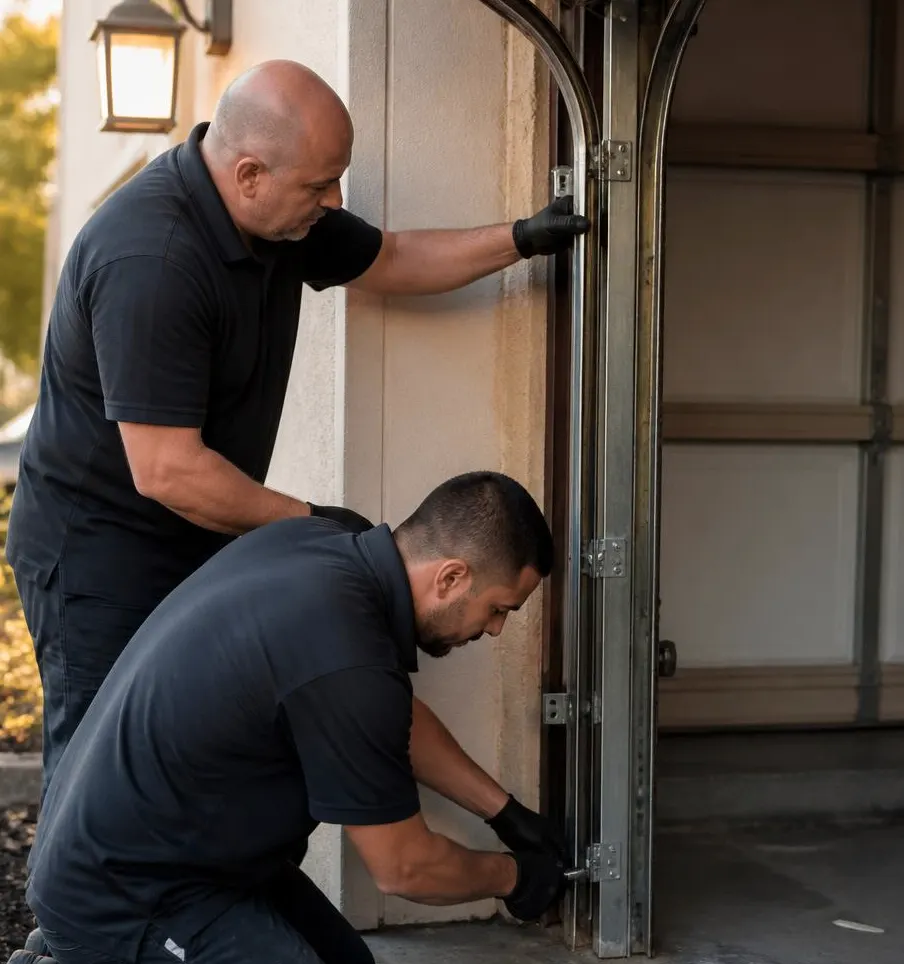
What a Technician Sees on a Typical Call Like This
It usually starts the same way: one spouse thinks the brownish bubbling along the bottom of the garage door is "just surface rust, no big deal." The other thinks the whole door is rotting from the inside out and needs to be replaced tomorrow. A technician pulls up, looks at the bottom two feet of the door, and often finds both of you are a little bit right. There's flaking paint and rust freckling along the bottom panel, the weatherstripping is packed with pine needles and damp mulch, and when they press a thumb against the lower corner, the panel gives slightly — a sign that moisture has gotten past the surface and started working on the material underneath.
This exact scene plays out constantly in this part of North Carolina. Hot, humid summers followed by heavy rain, pollen season that coats and traps moisture against every surface, and the occasional remnants of a hurricane rolling through inland all add up to garages that stay damp far more than people realize. Add pine trees shedding needles and sap into the door track and threshold, and you've got ideal conditions for rust and swelling to take hold quietly over a season or two.
Rust vs. Swelling vs. Real Moisture Damage — They're Not the Same Thing
These three problems get lumped together, but they're different animals with different levels of urgency.
Surface Rust
This is the orange-brown speckling you see on steel doors, usually starting at the bottom panel or around hardware like hinges and track bolts. It's caused by paint getting scratched or worn through, exposing bare metal to moisture. On its own, surface rust is cosmetic. Left alone through a few more humid seasons, it stops being cosmetic.
Swelling
This almost always means wood — either a wood garage door, a wood jamb or frame, or a wood-trimmed steel door. Swelling happens when wood absorbs water faster than it can dry out. You'll notice the door getting harder to close, dragging on one side, or not sitting flush in the frame anymore. Painted wood that's starting to swell often shows cracking or bubbling paint right before the wood itself visibly puffs up.
Structural Moisture Damage
This is the one that should actually end the argument. It's what happens after rust or swelling goes unaddressed: delamination on steel doors (the outer skin separating from the insulation core), soft or crumbling wood you can push a screwdriver into, or rust that's eaten through a panel enough to leave a hole or a visibly thinner spot. At this point you're not talking about a touch-up, you're talking about panel replacement or a new door.
Why This Area Makes It Worse
A few local realities speed up all three of these problems:
- Heavy rain and poor drainage around a garage slab can leave the bottom few inches of a door sitting in standing water or splash-back for hours after a storm.
- Pollen and pine debris build up in tracks and weatherstripping, holding moisture against the door instead of letting it drain and dry.
- Humid summers mean condensation forms on the inside of steel doors even when it's not actively raining, especially in garages without much airflow.
- Occasional ice storms add a freeze-thaw cycle on top of everything, which is brutal on any area where water has already started to get into seams, joints, or cracked paint.
None of this means your garage door is poorly made. It means a door built for a dry climate up north is going to show wear differently than one that's been through five or six seasons of this specific kind of weather.
What to Actually Check
- Run a hand along the bottom 18 inches of each panel, inside and out, feeling for soft spots or give.
- Look closely at hinges, track bolts, and the bottom seal track for rust bleeding onto the paint.
- Open and close the door slowly, listening and watching for dragging, binding, or uneven gaps at the frame — classic swelling signs.
- Check the bottom weatherstripping for cracking, gaps, or debris packed in so tight it's holding water against the door instead of shedding it.
- If you have a wood door or wood trim, press a screwdriver gently into any discolored area. If it sinks in easily, that's rot, not just surface staining.
If you find surface rust or minor swelling, this is maintainable: clean and dry the affected area, sand back loose rust, prime bare metal, repaint, and clear out the tracks and weatherstripping so water actually drains away from the door instead of sitting against it. If you find soft wood, delamination, or rust holes, that's a repair or replacement conversation, not a weekend project.
When to Call West End Garage Door
If you're not sure which category you're in, that's exactly what a service call settles. Our technicians can tell the difference between cosmetic rust and a panel that's actually failing, and we'll tell you honestly which one it is instead of upselling a full door when a repair will do. For doors that are holding up but showing early rust or seal wear, our Garage Door Maintenance service cleans out tracks, treats rust spots before they spread, and checks weatherstripping and hardware so moisture stops accumulating where it does the most damage. For doors with real structural moisture damage — soft wood, delaminated panels, or rust that's gone through the metal — our Garage Door Repair and panel or full-door replacement options get you back to a door that can actually handle another few years of Moore County weather.
If you and your spouse can't agree on which one you're dealing with, let us settle it. Call West End Garage Door for an honest assessment and straightforward pricing, serving West End, Pinehurst, Southern Pines, Aberdeen, Seven Lakes, Carthage, Whispering Pines, and Robbins, NC.